

Introduction to Pasta Primavera
Pasta Primavera is not just a dish; it’s a vibrant celebration of spring captured on a plate. This delightful Italian recipe features a colorful medley of fresh seasonal vegetables, making it an eye-catching and appetizing option for any spring meal. Historically, Pasta Primavera represents a shift in pasta cooking, incorporating the freshest produce and highlighting the natural flavors of vegetables. This dish has become a staple in Italian-American cuisine, cherished for its light yet satisfying character that defines the essence of spring dining.
The History and Origin of Pasta Primavera
The origins of Pasta Primavera are somewhat shrouded in mystery, with many food enthusiasts debating its true beginnings. While the term \”Primavera\” means \”spring\” in Italian, the actual creation of this pasta dish is often attributed to New York City in the 1970s. There is a popular myth that it was invented by a chef in a trendy Manhattan restaurant, who prepared the dish for a visiting celebrity. Regardless of its precise origins, it’s clear that Pasta Primavera has evolved from traditional Italian cooking, which typically focuses more on sauces and less on fresh vegetables. The incorporation of seasonal produce into this dish has made it a beacon of freshness and creativity, allowing cooks to express the flavors of spring in a beautiful, delicious way.
The Benefits of Fresh Spring Vegetables
Using fresh spring vegetables in Pasta Primavera not only enhances the dish’s flavors but also provides numerous health benefits. Seasonal vegetables like asparagus, snap peas, and baby spinach are packed with vitamins, minerals, and antioxidants that can boost your overall health. For instance, asparagus is rich in vitamin K and folate, while spinach provides iron and vitamin C. The use of vibrant, fresh produce ensures that not only does the dish shine in appearance but also adds a nutritional punch to your meal. Studies have shown that diets rich in vegetables can contribute to better heart health, improved digestion, and a stronger immune system, making Pasta Primavera a fantastic choice for anyone looking to add more greens to their diet.
Ingredients You Need for the Recipe
When it comes to making Pasta Primavera, having the right ingredients is crucial to achieving that perfect balance of flavors and textures. Here’s a breakdown of the essential components:
- Pasta – Typically, fettuccine or linguine is used, providing a lovely base for all the fresh ingredients.
- Snap peas – They add a sweet crunch that complements the other vegetables beautifully.
- Asparagus – This brings a slightly earthy flavor and a wonderful texture when cooked just right.
- Baby spinach – Offers a mild flavor and is loaded with nutrients that are great for your health.
- Cherry tomatoes (optional) – Add a burst of sweetness and color to the dish.
- Garlic – A staple in Italian cuisine, it imparts fragrant undertones and enhances the overall flavor profile.
- Unsalted butter – Adds richness to the sauce, creating a creamy consistency.
- Heavy cream or half-and-half – These create a luxurious, creamy sauce that envelopes the pasta and vegetables.
- Parmesan cheese – Provides a nutty, savory finish that rounds out the dish perfectly.
- Lemon zest and juice – Imparts a refreshing brightness that elevates the flavors of the vegetables.
- Salt and black pepper – Essential for enhancing all the flavors and bringing the dish together.
- Olive oil – Used for sautéing and adds a light, fruity flavor.
- Basil or parsley (optional) – A sprinkle of fresh herbs for garnish that adds color and an aromatic finish.
See the recipe card below for the full list of ingredients and measurements.
Step-by-Step Cooking Instructions
Now that you have all the ingredients ready, it’s time to bring it all together. Here’s how to prepare Pasta Primavera:
- Start by bringing a large pot of salted water to boil. Once boiling, add your pasta and cook until al dente, about 9 to 11 minutes depending on the package instructions. Stir occasionally to prevent sticking. Don’t forget to save a cup of that pasta water for later!
- While your pasta is cooking, heat some olive oil in a large skillet over medium heat. Toss in the snap peas and cut asparagus, sautéing them for about 4 to 5 minutes until they are bright green and tender-crisp.
- Next, add the baby spinach and if you’re using them, the cherry tomatoes. Cook for another minute or two until the spinach wilts down. Season the veggies with a pinch of salt and pepper, then set them aside off the heat.
- In the same skillet, melt the unsalted butter over medium-low heat and add the minced garlic. Sauté gently for about 1 to 2 minutes until fragrant, but make sure not to let it brown.
- Pour in the heavy cream, stirring to combine, then let it simmer gently for about 3 to 4 minutes until slightly thickened.
- Stir in the grated Parmesan cheese until melted and smooth. Add the lemon zest and juice, adjusting the seasoning with more salt and pepper if needed. If the sauce feels too thick, slowly add reserved pasta water to reach your desired consistency.
- Finally, return the vegetables to the skillet, along with the drained pasta, and toss everything together over low heat for about 1 to 2 minutes, ensuring all the ingredients are well-coated with the comforting sauce.
- Remove from heat, stir in the chopped basil or parsley for a fresh finish, and serve immediately topped with extra Parmesan and a twist of lemon zest for that perfect touch.
Tips for Perfecting Your Sauce
Your sauce can make or break your Pasta Primavera experience. Here are some tips to ensure you achieve gooey perfection:
- Add more flavors: Consider incorporating a splash of white wine into the sauce for added depth.
- Balance acidity: Make sure to adjust the lemon juice to keep the flavors balanced and vibrant.
- Experiment with herbs: Fresh herbs like thyme or oregano can bring additional freshness and a distinct aroma to the dish.
Consider pairing your dish with a creamy lemon sauce to enhance the delicious flavors of the vegetables.
Serving Suggestions and Pairings
When serving Pasta Primavera, presentation is key! Here are some suggestions to elevate your dining experience:
- Plating: Twirl the pasta on a plate and layer the vegetables neatly on top for a restaurant-style presentation.
- Garnishes: A sprinkle of freshly chopped herbs and a handful of grated Parmesan can make the dish visually stunning.
- Complementary sides: Pair your Pasta Primavera with a light, refreshing salad or a piece of crusty garlic bread to make it a complete meal.
Try serving your Pasta Primavera with Bagna Cauda for a delightful Italian touch. Additionally, a Mediterranean pasta salad would make a refreshing side dish to complement your Pasta Primavera meal.
Nutritional Information
For those mindful of their nutrition, here’s a quick breakdown of what a serving of Pasta Primavera typically includes:
- Calories: Approximately 475 calories
- Fat: About 17.5 grams
- Carbohydrates: Roughly 57.5 grams
- Protein: About 16.5 grams
This nutritional profile shows that Pasta Primavera can easily fit into a balanced diet, especially when paired with a variety of seasonal vegetables known for their many health benefits!
Frequently Asked Questions
Here, we address some common concerns about making Pasta Primavera:
- Can I use different types of pasta for this recipe?
Absolutely! You can substitute fettuccine or linguine with any pasta you prefer, such as penne, farfalle, or even gluten-free options. Just adjust the cooking times according to the pasta you choose. - What vegetables can I add to my Pasta Primavera?
Feel free to get creative! Along with snap peas and asparagus, you can add bell peppers, zucchini, carrots, or any seasonal vegetables you enjoy. Just make sure to adjust the cooking time based on the vegetables you choose. - How can I make this recipe vegan?
To make a vegan version of Pasta Primavera, use gluten-free pasta, replace heavy cream with coconut cream or a plant-based cream alternative, and omit the Parmesan cheese or substitute it with nutritional yeast for a cheesy flavor. - Can I prepare the pasta sauce ahead of time?
Yes, you can prepare the sauce ahead of time! Simply reheat it gently on the stovetop when you’re ready to combine it with the cooked pasta and vegetables. - What can I serve with Pasta Primavera?
Pasta Primavera pairs wonderfully with a side salad, garlic bread, or a light protein such as grilled chicken or shrimp. A crisp white wine, like Sauvignon Blanc, complements the dish nicely too!
Conclusion
Pasta Primavera is a dish that embodies the freshness of spring and the joy of cooking. It’s perfect for a quick weeknight dinner yet elegant enough for special occasions. I invite you to try this recipe and discover the delightful balance of flavors and textures that come from fresh vegetables and creamy sauce. Don’t forget to share your experiences or variations with us! Cooking can be a wonderful adventure, and this Pasta Primavera is a perfect way to celebrate the bounty of the season.
Try out our Pasta Primavera recipe to celebrate the flavors of spring!
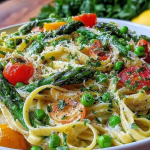
Pasta Primavera
Ingredients
Pasta and Vegetables
- 12 oz fettuccine or linguine pasta
- 1 cup snap peas trimmed
- 1 bunch asparagus trimmed and cut into 2-inch pieces
- 2 cups baby spinach
- 0.5 cup cherry tomatoes halved (optional)
Sauce
- 3 cloves garlic minced
- 2 tablespoons unsalted butter
- 1 cup heavy cream (or half-and-half for a lighter option)
- 0.5 cup Parmesan cheese freshly grated
- 1 tablespoon lemon zest
- 2 tablespoons fresh lemon juice
- Salt and freshly ground black pepper to taste
- 2 tablespoons olive oil
- 2 tablespoons chopped fresh basil or parsley (optional)
Instructions
- Bring a large pot of salted water to a boil. Add 12 oz of fettuccine or linguine and cook according to package instructions until al dente. Once done, reserve 1 cup of pasta water and drain the rest.
- While pasta cooks, heat 2 tablespoons olive oil in a large skillet over medium heat. Add snap peas and asparagus, cook until tender-crisp.
- Add baby spinach and optional cherry tomatoes, cook until spinach wilts. Season with salt and pepper, set aside.
- In the same skillet, melt unsalted butter, add minced garlic and sauté until fragrant.
- Pour in heavy cream, let simmer to thicken slightly, then stir in Parmesan cheese, lemon zest, and lemon juice. Adjust seasoning.
- Return vegetables to the skillet, add drained pasta, and toss to combine.
- Remove from heat, stir in fresh basil or parsley, and serve immediately.