

Introduction to Spring Roll Salad
If you’re searching for a vibrant and refreshing dish that captures the essence of spring dining, look no further than the delightful spring roll salad. This modern twist on traditional spring rolls is not only visually stunning with its palette of bright colors but also a celebration of fresh, crunchy vegetables. It serves not only as a tasty meal but also embodies a healthy lifestyle choice, making it a perfect candidate for your next gathering or meal prep brunch. Imagine colorful ribbons of cabbage, bright carrots, and crisp cucumbers—this dish is a promise of joy with every bite.
Perfect for warm weather, a spring roll salad bursts with flavors that evoke a sense of lightness and refreshment. It’s a dish that sings of summer days and outdoor picnics, encouraging everyone to dig in and enjoy. With an easy-to-prepare recipe, you’re just a handful of ingredients away from creating a salad that will impress your guests or serve as a quick weeknight dinner. Let’s dive into the world of flavors that can be found in this remarkable spring roll salad.
Cultural Significance of Spring Rolls
The origins of spring rolls are deeply rooted in Asian cuisine, dating back to the 4th century in China, where they were first made as a celebration of the spring harvest. Traditionally, these rolls are filled with an array of vegetables, meat, and sometimes even seafood, all wrapped in a delicate rice paper that adds a unique texture to each bite. As they traveled across borders and became popular in various cultures, the spring rolls adapted to local preferences, transforming into countless regional variations like Vietnamese summer rolls, Thai crispy spring rolls, and others.
These variations highlight the cultural significance of spring rolls as more than just food; they embody the artistry of culinary adaptation and innovation. By creating a salad version, we’re not only paying tribute to this beloved dish but also inviting you to explore new textures and flavors. Each ingredient reflects the characteristics of seasonal produce, making spring roll salads a fantastic option for those who appreciate fresh ingredients and wholesome meals.
Benefits of Eating More Veggies
Incorporating more vegetables into your meals is essential for maintaining optimal health. Vegetables are packed with vitamins, minerals, and essential nutrients that support bodily functions. For instance, the vibrant colors of carrots, bell peppers, and cabbage in our spring roll salad are indicators of their high nutritional value. Carrots are rich in beta-carotene and antioxidants, while bell peppers provide the immune-boosting vitamin C.
Adding fiber-rich vegetables to your diet can help improve digestion and keep you feeling satisfied longer. With the spring roll salad, it’s not just about adding more greens to your plate; it’s about celebrating the crunch and the freshness that such a blend provides. This salad is an effortless way to enjoy the vast array of colors and textures that vegetables offer, making healthy eating a joy rather than a chore.
Key Ingredients for Spring Roll Salad
The key to a delicious spring roll salad lies in its fresh ingredients, each contributing unique flavors and textures to the dish:
- Shredded cabbage – this forms the base, giving a crunchy texture that’s refreshing and light.
- Shredded carrots – adds sweetness and vibrant color, enriching the salad visually and nutritionally.
- Red bell pepper – provides a delightful crunch and a slightly sweet flavor that complements the other ingredients.
- Cucumber – these slices bring a coolness that balances all other flavors and enhances the salad’s freshness.
- Fresh cilantro and mint – the herbs infuse the salad with a fragrant aroma and layers of flavor that elevate the overall experience.
- Chopped roasted peanuts – a sprinkle of these adds a satisfying crunch and nutty richness.
- Pennut butter – offers creaminess and depth to the dressing, creating that signature flavor.
- Rice vinegar and soy sauce – provide acidity and saltiness, rounding out the taste profile harmoniously.
- Honey – adds a hint of sweetness; for a vegan option, consider using maple syrup.
- Garlic – a hint of this pungent ingredient in the dressing increases flavor complexity.
- Sesame oil – adds an unmistakable aromatic quality to the dressing that ties everything together.
See the recipe card below for the full list of ingredients and measurements.
Step-by-Step Instructions
Let’s get down to the delicious details of how to assemble your spring roll salad:
- Begin by preparing your vegetables. Shred the cabbage finely, julienne the carrots, thinly slice the red bell pepper, and cut the cucumber into thin strips.
- In a large mixing bowl, combine the shredded cabbage, carrots, bell pepper, cucumber, cilantro, and mint. Toss them gently to ensure they are well mixed.
- Next, prepare the dressing. In a smaller bowl, whisk together rice vinegar, smooth peanut butter, soy sauce, honey, sesame oil, lime juice, and minced garlic until smooth.
- Drizzle the peanut dressing over the salad mixture and toss gently, ensuring all the ingredients are evenly coated.
- Top off your salad with chopped roasted peanuts, adding an extra crunch.
- Serve immediately and enjoy your colorful and nutritious creation!
Tips for Customizing Your Salad
Your spring roll salad can be as unique as you are! Here are some tips for customization:
- Try different proteins: For a hearty meal, grilled chicken, sautéed shrimp, or crispy tofu are fantastic additions.
- Mix up the veggies: Seasonal produce like snap peas, radishes, or even avocados can elevate the freshness of your salad.
- Switch the dressing: If peanut dressing isn’t your thing, consider sesame dressing, a soy-ginger dressing, or even a spicy sriracha blend.
- Add more texture: Incorporate crunchy toppings like fried onions, sesame seeds, or toasted nuts for added flavor contrasts.
- Season to your taste: Don’t hesitate to adjust flavors; a splash of lime juice or a dash of chili flakes can spice things up.
If you’re looking for more ways to customize your meals, check out our delicious Mediterranean Pasta Salad for fresh inspiration.
Nutritional Information
Understanding the nutritional benefits of our spring roll salad is key for health-conscious eaters:
- Calories: Approx 150-200 calories per serving, based on ingredients.
- Protein: Varies with the addition of proteins, but a basic salad contains around 3-5 grams.
- Fats: The use of peanut butter and peanuts adds healthy fats, around 7-10 grams per serving.
- Carbohydrates: Generally contains about 10-15 grams depending on veggies used.
- Vitamins: Packed with vitamins A and C from the veggies, along with calcium and iron.
Portion control is essential, especially when consuming dressings, to maintain balance in your diet without sacrificing flavor.
Storage Tips for Leftover Salad
If you find yourself with leftover spring roll salad, don’t worry—proper storage can keep it fresh for future meals:
- Store the salad in an airtight container in the fridge for up to 2 days. However, if ingredients feel extra watery, consider reassembling it closer to serving time.
- Keep the dressing separate until you’re ready to eat to ensure the veggies remain crisp and vibrant.
- If you want to repurpose leftovers, consider using the salad as a filling for a wrap or as a topping for rice bowls.
Serving Suggestions and Pairing Ideas
Enhance your spring roll salad experience by pairing it with complementary dishes. You could serve it alongside:
- Crunchy Asian Ramen Noodle Salad for a delightful Asian-inspired meal.
- Traditional spring rolls or dumplings to maintain the theme and add variety.
- Grilled proteins like chicken or shrimp that can nicely balance the freshness of the salad with heartiness.
Consider offering refreshing beverages like jasmine tea or coconut water to elevate the light, healthy feel of your dining experience.
Conclusion and Call to Action
In conclusion, the spring roll salad is more than just a salad; it’s a canvas for your culinary creativity and a testament to the joy of eating fresh. Its versatility makes it suitable for various occasions, whether a casual weeknight dinner or a festive gathering with friends. It encourages healthier eating by allowing you to enjoy a rainbow of vegetables in a single bowl. So why not take a step towards vibrant, nutritious eating by trying out this delightful spring roll salad?
We’d love to see your own variations! Share your creations in the comments or on social media, and let’s inspire each other to enjoy cooking and eating well together.
FAQ
Can I make this spring roll salad in advance?
Absolutely! You can prepare the salad ingredients ahead of time and store them in the refrigerator. Just add the dressing right before serving to keep everything fresh and crunchy.
What can I substitute for peanut butter in the dressing?
You can use almond butter or sunflower seed butter as a great alternative to peanut butter if you have allergies or dietary preferences.
Is this salad vegan-friendly?
Yes, this spring roll salad is vegan as long as you use a plant-based sweetener in place of honey!
How can I add protein to this salad?
You can add grilled chicken, shrimp, or tofu to make your salad more filling. Just make sure to season your protein well for extra flavor!
What are some good toppings for this salad?
You can top your salad with additional herbs like basil or mint, crispy fried onions, or even avocado for extra creaminess!
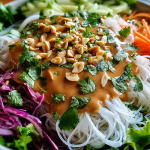
Spring Roll Salad with Peanut Dressing
Instructions
- In a large bowl, combine the shredded cabbage, carrots, bell pepper, cucumber, cilantro, and mint.
- In a small bowl, whisk together the rice vinegar, peanut butter, soy sauce, honey, sesame oil, lime juice, and garlic to make the peanut dressing.
- Pour the peanut dressing over the salad and toss gently to coat.
- Sprinkle the chopped peanuts over the top.
- Serve immediately.