Middle Eastern Parsley And Walnut Pesto
Discover a rich and creamy Middle Eastern pesto that’s perfect for any dish. 🌿🥙
On this page9 quick jumps
TOC
9 quick jumps
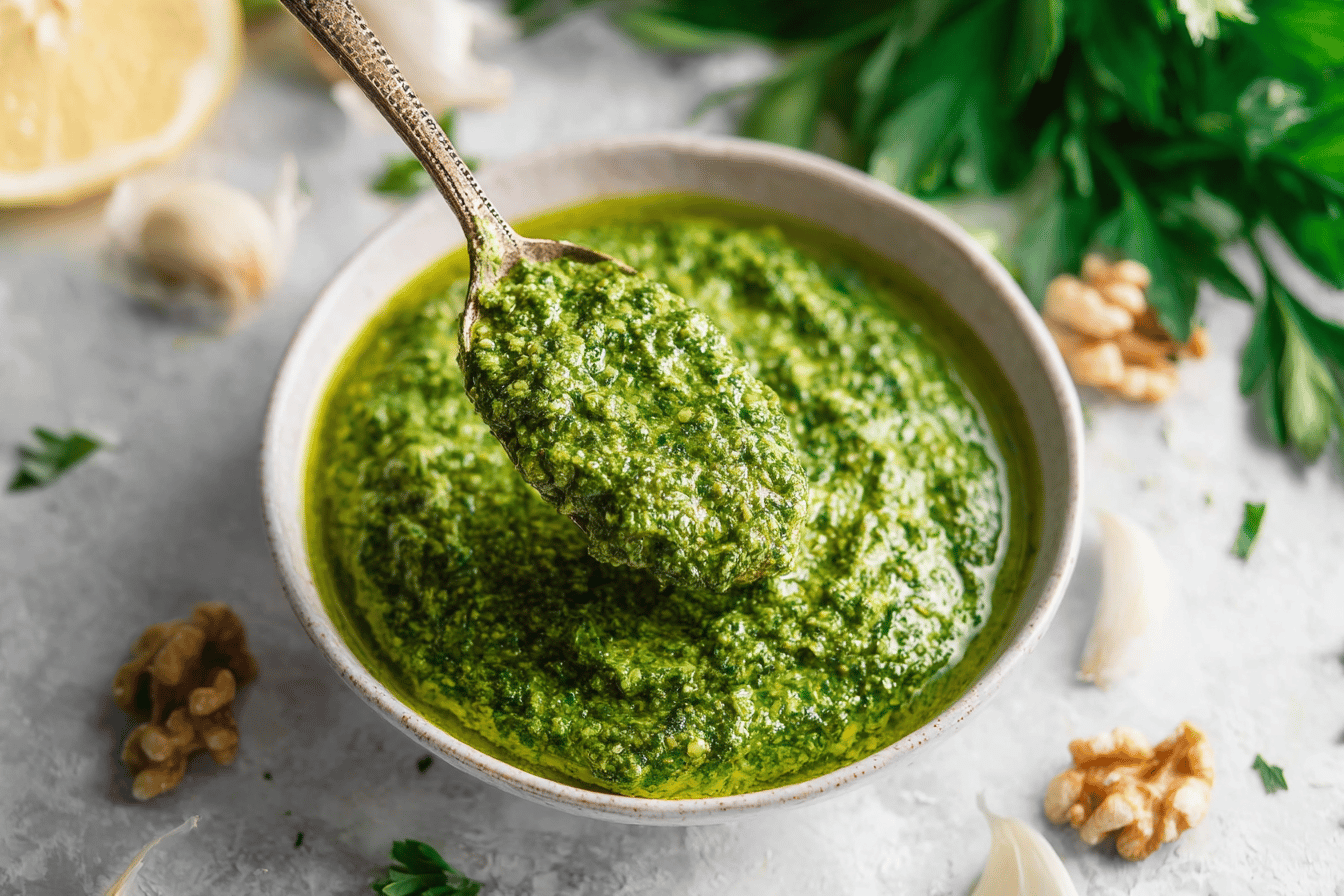
Discover the vibrant flavors of the Middle East with this rich and creamy Parsley and Walnut Pesto. This unique twist on traditional pesto draws inspiration from the aromatic herbs and nuts commonly found in Middle Eastern cuisine. The combination of fresh parsley, toasted walnuts, and tahini creates a luscious, green sauce that enhances any dish. Whether you’re preparing a family meal, hosting a dinner party, or simply looking to elevate your everyday snacks, this Middle Eastern pesto is sure to impress. Serve it with pita chips, drizzle it over grilled vegetables, or use it as a marinade for meats. Its versatility makes it a staple condiment that can be enjoyed on numerous occasions.
Tools and Equipment
Before diving into the preparation of this delightful pesto, let’s gather the necessary tools and equipment to ensure a smooth cooking process.
- Food processor: Essential for blending the ingredients into a creamy consistency.
- Dry skillet: Used for toasting walnuts, enhancing their flavor.
- Measuring cups and spoons: For accurate ingredient measurements.
- Spatula: Helpful for scraping down the sides of the food processor.
- Storage container: Airtight containers are perfect for storing leftover pesto.
Ingredients List
Gather the following ingredients to make your Middle Eastern Parsley and Walnut Pesto:
- 2 cups flat-leaf parsley leaves, packed
- ½ cup walnuts, toasted
- ¼ cup tahini
- 2 cloves garlic, peeled
- ¼ cup fresh lemon juice
- ¼ cup cold water
- ½ teaspoon salt, or to taste
- ¼ cup extra-virgin olive oil (optional, for a richer taste)
Each ingredient plays a vital role in creating the pesto:
Flat-leaf parsley: The star ingredient, providing freshness and vibrant color.
Walnuts: These add a rich, nutty flavor and creamy texture when blended.
Tahini: A sesame seed paste that contributes creaminess and depth of flavor.
Garlic: Adds a pungent kick, balancing the other flavors beautifully.
Lemon juice: Brings acidity, brightening the overall taste of the pesto.
Cold water: Helps achieve the desired consistency, making the pesto smooth.
Salt: Enhances all the flavors, making them more pronounced.
Extra-virgin olive oil: Optional, but it adds richness and a luxurious mouthfeel.
Preparation Steps
Following these preparation steps will set the foundation for your Middle Eastern pesto:
- Toast the walnuts: Place the walnuts in a dry skillet over medium heat for 3-5 minutes, until they are fragrant and lightly browned. This step is crucial as it enhances the nuttiness of the walnuts.
- Prepare the parsley: Wash and dry the flat-leaf parsley thoroughly to remove any dirt or impurities. This ensures a clean and fresh taste.
- Peel the garlic: Use fresh garlic cloves for the best flavor. Make sure to remove any green shoots for a milder taste.
Step-by-Step Cooking Instructions
Now, let’s transform those ingredients into a delicious pesto:
- Combine the ingredients: In a food processor, combine the toasted walnuts, fresh parsley, tahini, peeled garlic, lemon juice, and salt.
- Process the sauce: Pulse the ingredients until they are finely chopped and well combined. Be sure to scrape down the sides of the bowl as needed to ensure even mixing.
- Add liquid and emulsify: With the motor running, gradually pour in the cold water and, if using, the olive oil. Blend until the mixture is creamy and smooth. This step is crucial for achieving that perfect pesto texture.
- Taste and adjust: Sample the pesto and adjust the seasoning by adding more salt or lemon juice as desired. This is your chance to personalize the flavor!
- Serve or store: Serve immediately with pita chips, roasted vegetables, or grilled meats. If not using right away, transfer the pesto to an airtight container. It will last in the refrigerator for up to 5-6 days.
Nutritional Information and Health Benefits
This Middle Eastern Parsley and Walnut Pesto is not only delicious but also packed with nutritional benefits. Here’s what makes it a healthy option:
Parsley: Rich in vitamins A, C, and K, parsley is known for its antioxidant properties and is great for overall health.
Walnuts: A powerhouse of omega-3 fatty acids, walnuts support heart health and cognitive function. They also provide protein and fiber, making them a nutritious addition to meals.
Tahini: This sesame seed paste is loaded with healthy fats, protein, and vitamins. It is particularly beneficial for bone health due to its calcium content.
Garlic: Known for its immune-boosting properties, garlic can help reduce the risk of various diseases. It also contributes to heart health and has anti-inflammatory effects.
Lemon juice: A great source of vitamin C, lemon juice aids digestion and boosts the immune system.
Overall, this pesto is a nutrient-dense option that can enhance your meals while providing a variety of health benefits.
Common Mistakes and Tips to Perfect the Recipe
To ensure your pesto turns out perfectly, keep these common mistakes and tips in mind:
- Over-processing: Avoid over-blending the pesto, as it can become too smooth. A bit of texture is desirable!
- Using stale walnuts: Always use fresh, toasted walnuts for the best flavor. Stale nuts can ruin the taste of your pesto.
- Skipping the toasting step: Toasting the walnuts enhances their flavor significantly, so don’t skip this step.
- Adjusting flavors: Don’t hesitate to tweak the salt or lemon juice according to your taste preferences.
Storage, Serving, and Reheating Tips
Here are some tips for storing and serving your Middle Eastern pesto:
- Storage: To extend the shelf life of your pesto, pour a thin layer of olive oil over the top before sealing the container. This helps to prevent oxidation.
- Serving suggestions: This pesto can be served with a variety of dishes. Try it with pita chips, as a dip for fresh vegetables, or drizzled over grilled meats and roasted vegetables.
- Reheating: If using the pesto as a sauce, be careful when reheating. Use low heat to avoid compromising the flavor and texture.
FAQs and Recipe Variations
Here are some frequently asked questions and variations of the recipe:
Can I use other nuts instead of walnuts?
Yes, feel free to experiment with other nuts like pine nuts, almonds, or pistachios for a different flavor profile.
Is there a nut-free version of this pesto?
Absolutely! Simply omit the walnuts and increase the tahini to maintain the creamy texture.
Can I freeze this pesto?
Yes, this pesto freezes well. Consider pouring it into an ice cube tray for easy portioning. Simply thaw when needed.
- For a spicy kick, add a pinch of red pepper flakes.
- Incorporate grated Parmesan cheese for a more traditional Italian flavor.
- Substitute spinach or arugula for part of the parsley for a unique twist.
Conclusion
This Middle Eastern Parsley and Walnut Pesto is not only a delicious addition to your culinary repertoire but also a celebration of vibrant flavors and healthy ingredients. Its creamy texture and aromatic profile make it a versatile condiment that can elevate any dish. Whether you’re enjoying it as a dip, a sauce, or a marinade, this pesto is sure to impress your family and friends. So go ahead, give this recipe a try, and embrace the rich flavors of the Middle East in your kitchen!
You might also like
The Ultimate Rainbow Orzo Salad – Bright, Fresh, and Delicious
Apr 30, 2026
Easy Spring Vegetable Orzo Salad Bursting with Fresh Flavors
Apr 9, 2026

Cozy Up with Irresistible Sun Dried Tomato Corn Chowder
Apr 8, 2026
The Ultimate Spring Roll Salad with Peanut Dressing
Apr 7, 2026
Reviews
Be the first to review this.