Best Spring Fettuccine with Asparagus (Easy & Creamy)
- Prep
- 15 min
- Cook
- 15 min
- Total
- 30 min
- Serves
- 4
- Calories
- 550 kcal
- Carbs
- 75.00 g
On this page13 quick jumps
TOC
13 quick jumps
Introduction
Introduction to Spring Fettuccine
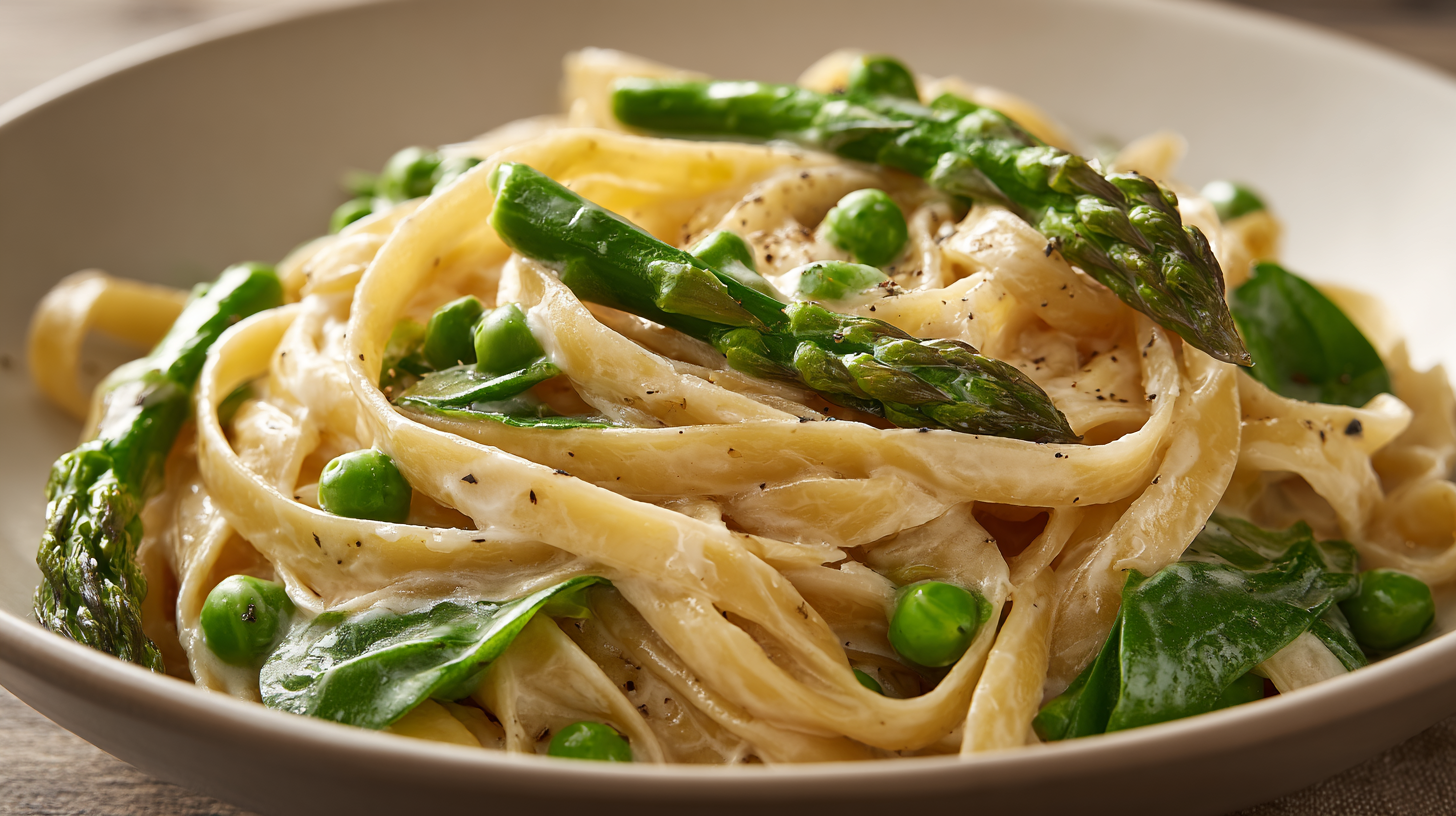
Spring is a vibrant season filled with fresh produce bursting with flavor, and there’s no better way to celebrate the season than with a plate of spring fettuccine. Picture this: tender fettuccine noodles, lightly dressed in a creamy, green sauce that captures the essence of fresh asparagus. Asparagus, with its crisp texture and bright flavor, is the star of the dish, making this classic pasta meal feel new and exciting. The combination of seasonal ingredients like peas and spinach transforms a comforting pasta dish into a delightful celebration of spring, bringing joy to your table.
With each forkful, you can taste the essence of spring, making it a perfect dish for a quick weeknight dinner or a special gathering. So let’s embrace the season and dive into this easy, creamy spring fettuccine with asparagus!
Benefits of Using Asparagus
Asparagus is more than just a delicious addition to our fettuccine; it is also packed with numerous health benefits. This vibrant vegetable is rich in vitamins A, C, E, and K, essential for maintaining a healthy body. It also contains antioxidants that can help protect your cells from damage and boost your immune system. Additionally, asparagus is a great source of dietary fiber, making it excellent for digestive health.
The versatility of asparagus in the kitchen is remarkable; it can be grilled, roasted, sautéed, or blended, making it an ideal ingredient for various dishes. Incorporating asparagus into your meals not only enhances the flavor profile but also elevates your dish’s nutritional value. You’ll find that this spring fettuccine is not just a treat for your taste buds but also a healthy choice for your overall diet.
Asparagus adds a delightful flavor to various dishes, like this creamy pasta with asparagus, showcasing its culinary versatility.
Ingredients You'll Need
- Fresh Fettuccine – the star of the dish, fresh pasta provides a delicate texture that complements the creamy sauce.
- Asparagus – crisp and vibrant, this spring vegetable enhances the dish’s flavor and provides essential nutrients.
- Fresh Peas – sweet and tender, these add a pop of color and a natural sweetness to balance the savory elements.
- Olive Oil – used to sauté the garlic, bringing out its flavor and preventing the pasta from sticking.
- Garlic – provides a fragrant, savory base for the sauce.
- Parmesan Cheese – adds richness and a nutty flavor to finish the dish.
- Milk – for creaminess, balancing the density of the sauce without making it too heavy.
- Unsalted Butter – adds a touch of richness and helps create a silky sauce.
- Kosher Salt – essential for enhancing the flavors of the dish.
- Freshly Ground Black Pepper – to season the dish with a warm, peppery kick.
- Lemon Zest – brightens up the flavors and adds a refreshing citrus note.
- Red Pepper Flakes – for those who enjoy a little heat, adding a pinch can elevate the dish.
- Toasted Pine Nuts – used for garnish, providing crunch and a nutty flavor that complements the creaminess.
See the recipe card below for the full list of ingredients and measurements.
Step-by-Step Cooking Instructions
Now, let’s get into how to prepare this delicious spring fettuccine. Follow these simple steps to create a satisfying and creamy meal:
- Bring a large pot of water to a boil, generously seasoning it with kosher salt. This will ensure that the pasta is flavorful. Once boiling, add fresh spinach and the sliced asparagus stalks (don’t forget to reserve the tips!). Cook for about one minute, until both are vibrant in color, then immediately transfer them to a blender or food processor.
- Using the same boiling water, add the reserved asparagus tips and fresh peas. Cook for about one minute until they are tender-crisp, then remove them with a slotted spoon and set them aside.
- To the blender with the blanched spinach and asparagus stalks, add a drizzle of olive oil, minced garlic, and a handful of grated Parmesan cheese. Blend on high until you achieve a smooth, vibrant green purée.
- Bring the pot of water back to a boil and cook the fresh fettuccine until it reaches the perfect al dente texture, following the cooking time on the package. Be sure not to rinse the pasta. Before draining, reserve at least two cups of the starchy pasta water. Drain the fettuccine and return it to the warm pot, drizzling it with a bit of olive oil and a splash of hot pasta water to prevent it from sticking.
- Pour the spinach and asparagus sauce over the warm pasta in the pot. Add a tablespoon of butter and a cup of milk, stirring well to combine. Gradually add the reserved pasta water, about a quarter cup at a time, stirring constantly over low heat until the sauce reaches your desired creamy consistency.
- Gently fold in the reserved peas and asparagus tips, warming them through in the sauce. Turn off the heat and stir in the fresh lemon zest along with a pinch of red pepper flakes. Season to taste with salt and pepper.
- Serve immediately, garnished with toasted pine nuts and extra Parmesan cheese on top for an added touch of flavor and elegance!
For a tasty side, consider our simple recipe for sautéed asparagus and mushrooms that pairs perfectly with pasta dishes.
Unique Flavor Variations Beyond Garlic and Lemon
While garlic and lemon are classic flavors that complement asparagus wonderfully, there are many ways to get creative with this dish. Here are some unique ingredients you might consider adding:
- Sun-dried Tomatoes – for a touch of Italian flair, incorporating sun-dried tomatoes can add a rich, tangy sweetness.
- Capers – these briny little morsels can enhance the dish with a pop of flavor, creating a delightful contrast with the creamy sauce.
- Fresh Herbs – don’t shy away from fresh basil, mint, or parsley. Adding these herbs can bring a refreshing brightness that redefines the dish.
- Mushrooms – sautéed mushrooms can add an earthy depth to the meal, making it heartier.
- Crème Fraîche – for a tangy twist, swapping some of the milk for crème fraîche can create a deeper flavor profile.
Experimenting with these variations not only keeps the dish exciting but also caters to different palates, allowing everyone to find their perfect flavor combination.
Asparagus in International Cuisines
Asparagus is a beloved vegetable found in cuisines across the globe. In Italy, for instance, it can be found in risottos that blend the creamy texture of rice with this crunchy vegetable. In Spain, it often graces plates as part of a tapas spread, where it is featured in dishes like asparagus with a garlic aioli for dipping. Each region offers its own take on this nutritious vegetable, showcasing its adaptability and cultural significance.
Explore more about how asparagus is featured in dishes globally, such as in pasta primavera, which can be made following our Fresh Spring Vegetable Pasta Primavera Recipe.
Tips for Perfect Fettuccine
To ensure your fettuccine turns out perfectly every time, keep these tips in mind:
- Salt your water – don’t hesitate to season the boiling water; it should taste like the sea. This step is crucial for imparting flavor into the pasta.
- Don’t rinse – always resist the urge to rinse pasta after cooking, as it washes away the starch that helps sauces adhere.
- Reserve pasta water – keeping a cup or two of the starchy cooking water can make a world of difference in adjusting your sauce’s consistency.
- Timing – pay close attention to cooking times, as fresh pasta cooks much faster than dried pasta.
- Combine properly – add the sauce to hot pasta and mix thoroughly to ensure every strand is coated beautifully with the sauce.
Serving Suggestions and Pairings
Once your sumptuous fettuccine is ready, consider serving it in a way that highlights its beauty and flavor. A simple, elegant garnish of additional Parmesan cheese and a sprinkle of freshly cracked black pepper can elevate the dish. Fresh herbs can be used as a colorful topping, adding not only beauty but also enhancing the taste.
Additionally, consider pairing your fettuccine with our honey lime chicken for a delicious and complementary flavor, or a crisp side salad to balance the richness of the creamy pasta.
Storing Leftovers
If you have leftovers (which is rare due to how tasty this dish is!), make sure to store them properly. Keep any leftover fettuccine in an airtight container in the refrigerator for up to three days. Reheating can be tricky; to maintain the creamy texture, gently warm it on the stove with a splash of water or milk to bring it back to life.
Conclusion: Enjoy Your Dish!
As you savor your creation of spring fettuccine with asparagus, take a moment to appreciate the vibrant flavors and textures that define this delightful dish. It's a celebration of the season's bounty and a reminder of the joy that cooking with fresh ingredients brings. We encourage you to experiment further, perhaps trying out different variations or sharing your unique twist on this recipe with others. Happy cooking!
Ingredients
- 2 cupsfresh spinach
- 12 ouncesasparagus (cut into 1-inch pieces, tips reserved)
- 1 cupfresh peas
- 1/4 cupextra virgin olive oil
- 2 clovesgarlic
- 1 cupgrated Parmesan cheese (plus more for serving)
- 9 ouncesfettuccine (fresh, ideally)
- 1 cup2% milk
- 1 tablespoonunsalted butter
- 2 cupsreserved pasta water
- —Kosher salt
- —Freshly ground black pepper
- —Zest of 1 lemon
- Pinchred pepper flakes (to taste)
- 1/4 cuptoasted pine nuts (for garnish)
Instructions
- 1
Bring a large pot of water to a boil, seasoning generously with Kosher salt. Add the fresh spinach and sliced asparagus stalks (reserving tips). Cook for one minute until vibrant green, then immediately transfer to a blender or food processor.
- 2
Using the same boiling water, cook the reserved asparagus tips and fresh peas for about one minute until tender-crisp. Remove them with a slotted spoon and set aside.
- 3
To the blender containing the blanched spinach and asparagus stalks, add the extra virgin olive oil, garlic cloves, and grated Parmesan cheese. Blend on high until you achieve a smooth, vibrant green purée.
- 4
Bring the pot of water back to a boil and cook the fettuccine until perfectly al dente. Do NOT rinse the pasta. Before draining, reserve at least 2 cups of the starchy pasta water. Drain the fettuccine and return it to the warm pot, drizzling with a little olive oil and a splash of hot pasta water.
- 5
Pour the spinach and asparagus sauce over the warm pasta in the pot. Add the butter and milk, stirring to combine. Gradually add the reserved pasta water until the sauce reaches your desired creamy consistency.
- 6
Gently fold in the reserved peas and asparagus tips to warm them through. Stir in the fresh lemon zest and red pepper flakes. Season to taste with salt and black pepper. Serve immediately, garnished with toasted pine nuts and extra Parmesan cheese.
Recipe Card
Best Spring Fettuccine with Asparagus (Easy & Creamy)
Keep it handy for later, send it to someone cooking with you, or open the clean print view.
- Prep
- 15 min
- Total
- 30 min
- Serves
- 4
You might also like
Irresistible Sugar-Free Strawberry Sauce for Tasty Pancakes
May 20, 2026
Flat Belly Smoothie 🍀: Your Ultimate Anti-Inflammatory Shake
May 16, 2026

Crispy Beef Tacos: Your New Favorite Game Day Dish
May 16, 2026

Buffalo Chicken Hot Pockets: The Ultimate High-Protein Snack
May 14, 2026
Reviews
Be the first to review this.