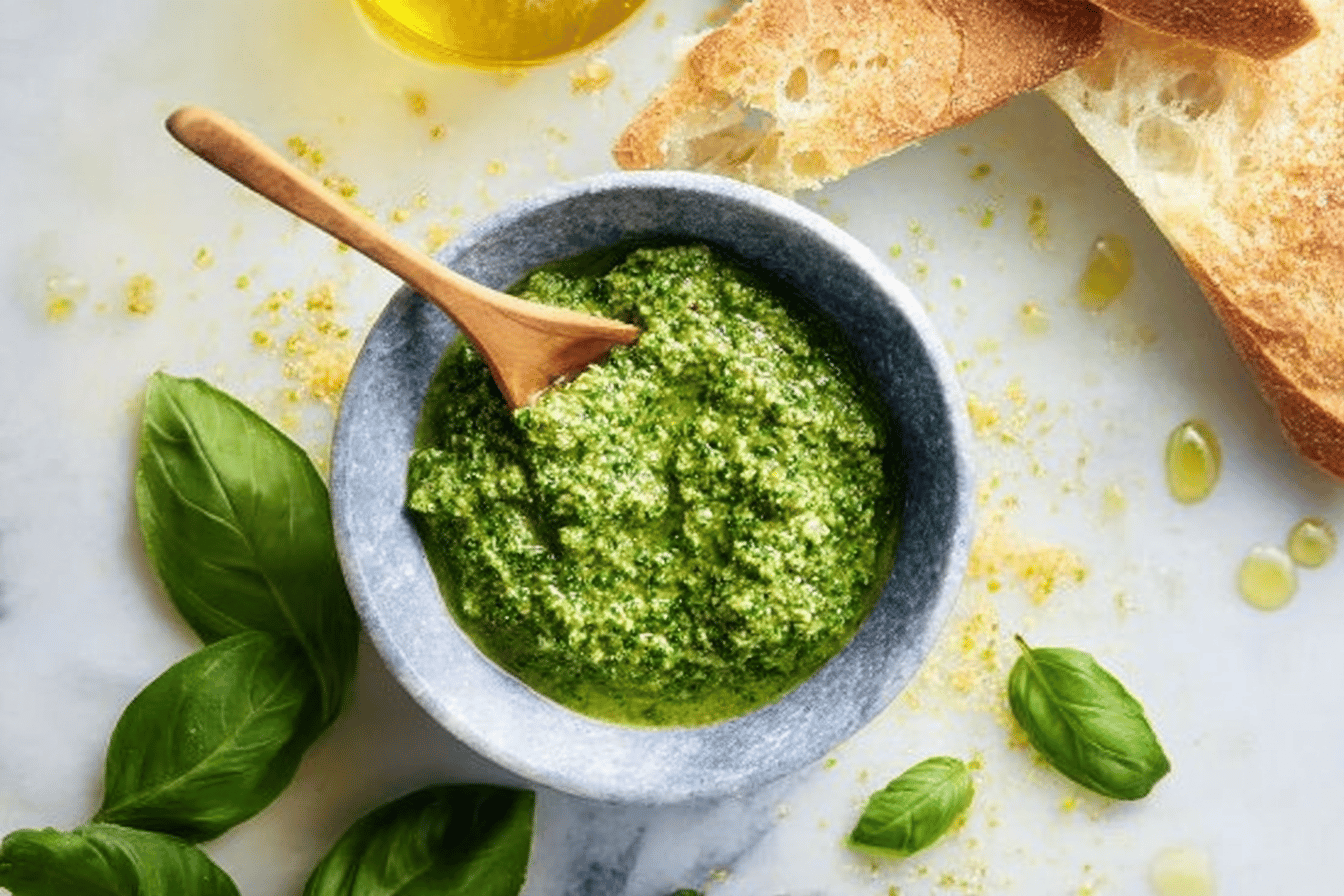
Basil Pesto
This bright and nutty basil pesto is a game changer for your dishes! 🍝🌿
On this page9 quick jumps
TOC
9 quick jumps
Basil pesto is not just a sauce; it’s a vibrant celebration of flavors that transports you straight to the sun-drenched hills of Italy. This bright and nutty basil pesto is a game changer for your dishes, adding a fresh twist to pasta, sandwiches, and even grilled meats. With its roots deeply embedded in Italian culinary tradition, particularly in the Liguria region, pesto has become a beloved staple around the world. Its rich green color and aromatic notes make it not only a feast for the taste buds but also a visual delight. Whether you’re preparing a cozy family dinner or hosting a festive gathering, this homemade basil pesto will elevate your meals and impress your guests.
Tools and Equipment
To create your homemade basil pesto, you'll need a few essential tools that will help simplify the process and enhance your culinary experience. Here’s what you’ll need:
- Food Processor: This is the heart of your pesto-making process, allowing you to blend all the ingredients smoothly.
- Measuring Cups and Spoons: Accurate measurements ensure that your pesto has the perfect balance of flavors.
- Spatula: A spatula will help you scrape down the sides of the food processor to ensure everything is well combined.
- Storage Container: An airtight container is essential for storing your pesto and keeping it fresh.
Ingredients List
The ingredients for basil pesto are simple yet powerful, each contributing to the sauce's unique flavor profile. Here’s what you need:
- ½ cup toasted pine nuts
- 2 tablespoons fresh lemon juice
- 1 small garlic clove
- ¼ teaspoon sea salt
- Freshly ground black pepper
- 2 cups basil leaves
- ¼ cup extra-virgin olive oil, plus more for a smoother pesto
- ¼ cup freshly grated Parmesan cheese (optional)
Toasted Pine Nuts: These nuts add a rich, nutty flavor and creamy texture to your pesto. Toasting them enhances their natural sweetness.
Fresh Lemon Juice: A splash of acidity from the lemon juice brightens up the sauce and balances the richness of the nuts and oil.
Garlic: A small clove of garlic provides a robust and aromatic base that infuses the pesto with depth and flavor.
Sea Salt and Black Pepper: These basic seasonings enhance all the ingredients, bringing out their natural flavors.
Basil Leaves: The star of the show, fresh basil imparts a sweet, fragrant essence that is characteristic of pesto.
Extra-Virgin Olive Oil: This high-quality oil gives the pesto its luscious texture and rich flavor, acting as a binder for all the other ingredients.
Parmesan Cheese: While optional, freshly grated Parmesan adds a savory, cheesy note that complements the other ingredients beautifully.
Preparation Steps
Before diving into making your pesto, a little preparation goes a long way. Here are the essential pre-cooking tasks:
- Toast the Pine Nuts: In a skillet over medium heat, toast the pine nuts until golden brown, stirring frequently to avoid burning. This step enhances their flavor.
- Prepare the Basil: Wash the basil leaves thoroughly and pat them dry. Make sure to remove any tough stems.
Tip: Make sure to measure out all your ingredients before starting to streamline the process!
Step-by-Step Cooking Instructions
Now that you have everything prepped, it’s time to make your basil pesto. Follow these steps for a delicious result:
- In a food processor, combine the toasted pine nuts, fresh lemon juice, garlic, sea salt, and black pepper. Pulse until the mixture is well chopped and combined.
- Add the basil leaves to the food processor and pulse again until they are incorporated with the nut mixture.
- With the food processor running, slowly drizzle in the extra-virgin olive oil. Continue to pulse until all ingredients are thoroughly blended.
- If you’re using Parmesan cheese, add it now and pulse briefly to combine. For a smoother pesto, drizzle in more olive oil until you reach your desired consistency.
Important Note: Taste your pesto and adjust the seasoning if necessary. You might want to add more salt, lemon juice, or cheese based on your preference!
Nutritional Information and Health Benefits
This basil pesto not only tantalizes your taste buds but also packs a nutritional punch. Here’s a brief overview of its health benefits:
Each ingredient in this pesto contributes to overall health:
- Pine Nuts: A great source of healthy fats, protein, and vitamins, pine nuts also contain antioxidants that support heart health.
- Basil: Rich in vitamins A, K, and C, basil has anti-inflammatory properties and may help support immune function.
- Olive Oil: Known for its heart-healthy monounsaturated fats, extra-virgin olive oil is also packed with antioxidants.
Overall, this basil pesto is not only delicious but also a nutritious addition to your meals!
Common Mistakes and Tips to Perfect the Recipe
Even though this recipe is straightforward, there are a few common pitfalls to avoid:
- Using Fresh Ingredients: Always opt for fresh basil and high-quality olive oil for the best flavor.
- Overprocessing: Be careful not to over-process the pesto; you want a bit of texture in your sauce.
- Storing Incorrectly: If not stored properly, pesto can oxidize and lose its vibrant green color. Make sure to keep it in an airtight container.
Pro Tip: If you plan to store your pesto for a while, consider freezing it in ice cube trays. This way, you can easily thaw small portions as needed!
Storage, Serving, and Reheating Tips
Once you've made your delicious basil pesto, here are some tips for storage and serving:
- Storage: Store your pesto in an airtight container in the refrigerator for up to a week. To prevent browning, drizzle a thin layer of olive oil on top before sealing.
- Freezing: Basil pesto freezes well. Transfer it to ice cube trays or small containers for easy portioning.
- Serving Suggestions: Toss your pesto with warm pasta, spread it on sandwiches, or use it as a marinade for grilled chicken or fish.
For a unique twist, try using basil pesto as a topping for pizza or as a dip for fresh vegetables!
FAQs and Recipe Variations
Can I use other herbs instead of basil?
Absolutely! You can experiment with other greens and herbs like parsley, cilantro, or arugula for a different flavor profile.
What can I use if I’m allergic to nuts?
For a nut-free version, substitute sunflower seeds for pine nuts. They provide a similar texture without the allergens.
Can I make pesto without cheese?
Yes, simply omit the Parmesan cheese for a dairy-free pesto. The flavor will still be delicious!
How do I adjust the consistency of my pesto?
If your pesto is too thick, simply drizzle in more olive oil until you reach your desired consistency.
- Vegan Basil Pesto: Omit the cheese and use nutritional yeast for a cheesy flavor.
- Spicy Basil Pesto: Add a pinch of red pepper flakes for a spicy kick.
- Avocado Basil Pesto: Blend in a ripe avocado for a creamy texture and added nutrients.
Conclusion
This bright and nutty basil pesto is not just a quick sauce; it’s a culinary masterpiece that can transform any dish into something extraordinary. With its vibrant flavor and fresh ingredients, it’s a must-try for anyone looking to elevate their cooking. So gather your ingredients, fire up that food processor, and enjoy the process of creating something delicious. Embrace the joy of cooking and let this pesto inspire your culinary adventures!
You might also like

Creamy Slow Cooker Chicken Nachos: A Satisfying Family Favorite
May 19, 2026

3 Step Homemade Cappuccino – A Simple Delight
May 13, 2026

Irresistible Angel Chicken and Rice Casserole: A Family Favorite
May 7, 2026
Indulge in Decadent Garlic Butter Steak Bites & Alfredo Rigatoni
May 7, 2026
Reviews
Be the first to review this.